

You are standing in your kitchen, staring at the chipped laminate countertops and the layout that hasn’t made sense since 1998. You know it’s time for a change. You can visualize the result—the open concept, the island, the natural light—but when you try to figure out the first step, your mind goes blank.
Do you call a contractor first? Do you buy the tile? Do you need a permit?
It is a paralysis common to almost every homeowner. And it is dangerous. Jumping in without a plan is the fastest way to join the 50% of homeowners who end up significantly over budget and months behind schedule. A renovation without a roadmap is just chaos with a price tag.
But it doesn’t have to be a nightmare. By following a chronological “order of operations,” you can strip away the stress and regain control.
Here is your comprehensive, 7-step guide on exactly how to start a house renovation, ensuring your dream home doesn’t become a money pit.
How to Start a Renovation (The Checklist)
If you are looking for the rapid-fire roadmap, here is the chronological order of operations:
- Define Scope & Goals: Determine exactly what needs to be done versus what you want done.
- Set a Detailed Budget: Calculate costs and add a 20% contingency fund.
- Secure Financing: Decide if you are paying cash, using a HELOC, or a construction loan.
- Assemble Your Team: Interview and hire architects, designers, and general contractors.
- Finalize Design & Materials: Select finishes before a hammer swings to prevent delays.
- Pull Permits: Ensure all legal paperwork is filed with your local municipality.
Create the Schedule: Map out the demolition and construction timeline.
- How to Start a Renovation (The Checklist)
- Step 1: Define Your Vision and Scope
- Step 2: The Truth About Budgeting
- Step 3: Funding Your Project
- Step 4: Assembling the Dream Team
- Step 5: The Design Phase (Before You Demo)
- Step 6: Navigating Permits and Red Tape
- Step 7: Timeline and Logistics
- Conclusion: Start With Confidence
- Frequently Asked Questions (FAQ)
Step 1: Define Your Vision and Scope
Before you look at a single paint swatch, you must define the “Why” and the “What.” The biggest mistake homeowners make is vague planning (e.g., “I want a nicer bathroom”). Vague plans lead to “scope creep,” the silent killer of renovation budgets.
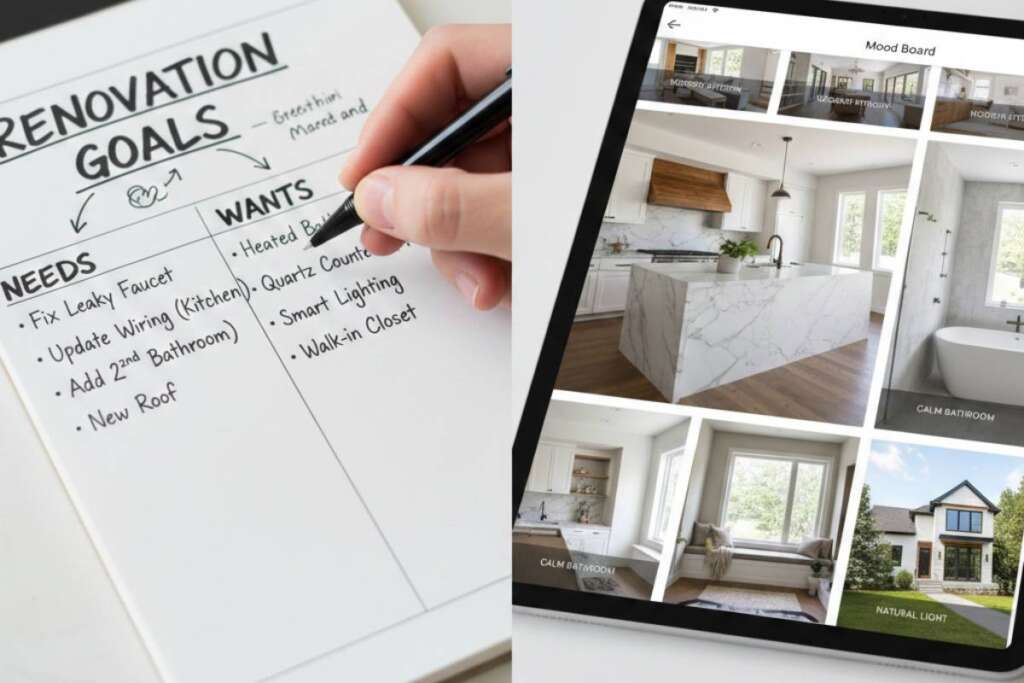
Separate Needs vs. Wants
Sit down and create two distinct lists:
- The Must-Haves: Structural repairs, fixing leaks, updating dangerous electrical wiring, and adding necessary square footage. Be mindful of hidden dangers in older properties; if your home was built before 1990, learning how professionals remove asbestos or other hazardous materials is a critical safety ‘must-have’ before demolition begins.
- The Nice-to-Haves: Heated floors, smart home tech, skylights, high-end marble.
Create a Vision Board
Words are often misinterpreted; images are universal. Use tools like Pinterest or Houzz to collect visual references. When you eventually hire a pro, showing them a picture prevents the “I thought you meant…” conversation later.
Pro Tip: Focus on how you want the space to function, not just how it looks. A beautiful kitchen that is impossible to cook in is a failed renovation.
Step 2: The Truth About Budgeting
This is the step that causes the most anxiety, but clarity here equals freedom later. You cannot start a house renovation without a hard number.
The Breakdown
A healthy renovation budget breakdown typically looks like this:
- Labor: 30–35%
- Materials: 30–35%
- Design/Architect Fees: 10–15%
- Permits & Fees: 3–5%
- The Contingency Fund: 10–20%
The Critical Contingency Fund
Never skip the contingency. If your total budget is $50,000, you only have $40,000 to spend. The remaining $10,000 is for the rot you find behind the walls or the plumbing surprise under the floorboards. If you don’t use it, great—buy new furniture at the end. If you do need it, you won’t panic.
Step 3: Funding Your Project
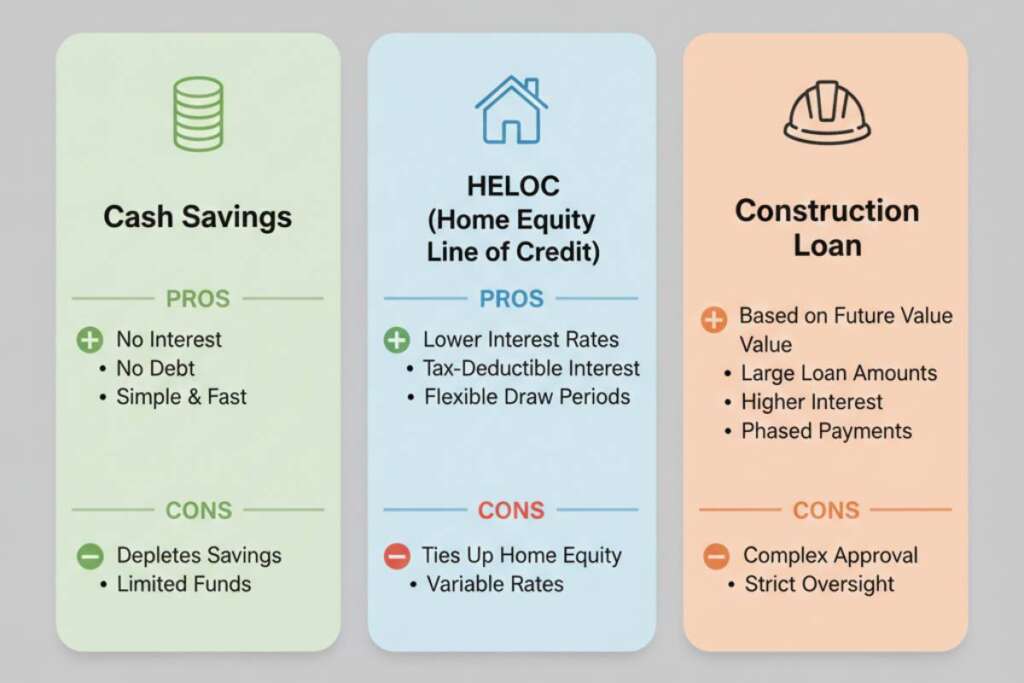
Once you have a number, you need to determine where the money is coming from.
- Cash Savings: The safest route. No interest, no debt. Best for smaller cosmetic updates.
- HELOC (Home Equity Line of Credit): Uses your home’s equity as collateral. Interest is often tax-deductible (check with your CPA). Good for mid-to-large projects.
- Home Renovation Loan (e.g., Fannie Mae Homestyle): Based on the future value of the home after renovations. Best for “fixer-uppers” requiring massive work.
Step 4: Assembling the Dream Team
Who you hire will determine the success of your project more than any other factor.
Match the Pro to the Project
Be honest about your skills. Painting a bedroom? Sure, DIY. Moving a load-bearing wall? Hire a pro. But equally important is hiring the right kind of pro.
If you own a modern condo, a standard contractor is perfect. However, if you own a Victorian or Edwardian property, general knowledge isn’t enough. You specifically need experts in Heritage Restorations and Renovations to navigate strict preservation codes and properly source period-correct materials.
The Hiring Hierarchy
Depending on the scope, you may need:
- Architect: Essential for structural changes, additions, or complex layout shifts.
- Interior Designer: Focuses on aesthetics, lighting plans, and material selection.
- General Contractor (GC): The project manager. They hire the subcontractors (plumbers, electricians) and oversee the schedule.
Red Flag Warning: If a contractor asks for 50% or more upfront before materials are ordered, walk away. A standard deposit is usually 10% to 33%.
Step 5: The Design Phase (Before You Demo)
This is the “measure twice, cut once” phase.
Many homeowners start demolition the moment they hire a contractor. Do not do this. You should not swing a hammer until you have selected your materials.
Why Pre-Selection Matters
If you tear out your toilet today, but the new one is on backorder for 12 weeks, you are living without a bathroom for three months unnecessarily.
Finalize these items before starting:
- Cabinetry and millwork
- Flooring types
- Plumbing fixtures
- Lighting fixtures
- Tile and grout colors

Step 6: Navigating Permits and Red Tape
It is tempting to skip permits to save time and money. Here is why that is a terrible idea:
- Resale Value: When you sell your home, unpermitted work can kill a deal.
- Insurance: If an unpermitted electrical job causes a fire, your insurance may deny the claim.
- The Stop-Work Order: If the city catches you, they will shut down your project, fine you, and force you to tear out work to inspect what’s behind it.
Your General Contractor will usually handle the logistics of pulling permits, but as the homeowner, the legal responsibility ultimately falls on you.
Step 7: Timeline and Logistics
Now that the plan is set, the team is hired, and the permits are approved, you can create the schedule.
The Mental Preparation
Renovations are disruptive. There will be dust. There will be noise. There will be days when it feels like nothing is happening (usually while waiting for inspections).
- Establish a Communication Plan: Decide how often you want updates. Weekly email? Daily text?
- Protect Your Belongings: Move furniture out of the work zone. Seal off other rooms with plastic sheeting to contain dust.
- Plan for “Life”: If you are renovating the kitchen, where will you set up the microwave and coffee pot?
- Manage Your Energy: Decision fatigue will set in. Applying proven time management strategies can help you balance the demands of the project with your daily work and family life without burning out.
Conclusion: Start With Confidence
Learning how to start a house renovation isn’t about knowing how to install drywall or wire a socket. It is about management. It is about layering a structure over a chaotic process.
By defining your scope, respecting your budget, and hiring the right professionals, you move from “anxious guesser” to “informed project manager.” The dust will eventually settle, the noise will stop, and you will be left with a home that fits your life perfectly.
What is the one part of your home you are most excited to change? Tell us in the comments below—we’d love to hear about your project!







Leave a Comment