

Trailer sway is one of the most serious hazards you can face when towing. What often starts as a slight wobble can escalate into a dangerous, uncontrollable situation within seconds. Whether you’re hauling a caravan for a weekend getaway, transporting a boat to the coast, or towing a work trailer loaded with equipment, understanding trailer sway is essential for safe driving.
This guide takes a deeper look at what trailer sway is, why it happens, and—most importantly—how to prevent it. By understanding the mechanics of sway and adopting best practices for loading, driving, and equipment setup, you can significantly reduce risk and enjoy a safer towing experience.
What Is Trailer Sway?
Trailer sway is the side-to-side motion of a trailer as it follows a tow vehicle. This movement can begin subtly, often going unnoticed at first. However, under the wrong conditions, it can quickly develop into a violent, swinging motion—commonly called fishtailing—that is extremely difficult to control.
The danger lies in how rapidly the motion builds. Each swing increases the force acting on both the trailer and the tow vehicle, creating a feedback loop that intensifies the instability. At higher speeds, even a small oscillation can spiral into a serious incident, including loss of control, jackknifing, or rollover.
Importantly, trailer sway doesn’t just affect the trailer—it directly impacts the tow vehicle. As the trailer moves side-to-side, it can disrupt steering, reduce traction, and force the driver out of their lane. This makes the way a risk not only to the driver but also to other road users.
Why Trailer Sway Is So Dangerous
One of the biggest challenges with trailer sway is how quickly it escalates. Unlike other driving hazards that allow time for correction, sway can intensify within seconds. Once it reaches a critical point, even experienced drivers may struggle to regain control.
At highway speeds, the forces involved are substantial. The trailer effectively becomes a lever acting on the rear of the tow vehicle. Each swing increases lateral force, which can:
- Pull the vehicle off course
- Reduce tyre grip and braking effectiveness
- Cause the trailer to jackknife
- Lead to a rollover if the centre of gravity shifts too far
Because of this, prevention is far more effective than trying to fix severe sway once it has already developed.

Common Causes of Trailer Sway
Understanding what causes trailer sway is the first step toward preventing it. In most cases, sway isn’t caused by a single factor but rather a combination of conditions that reduce stability.
1. Strong Winds and Passing Vehicles
Air movement plays a significant role in trailer stability. Large trucks, buses, and even fast-moving cars can create powerful gusts as they pass. These gusts push against the side of your trailer, especially if it has a large, flat surface area like a caravan.
Crosswinds can have a similar effect. On open roads or bridges, even moderate winds can create enough lateral force to initiate sway, particularly if your setup is already borderline unstable.
2. Poor Weight Distribution
Improper loading is one of the most common causes of trailer sway. When too much weight is placed behind the axle, it creates a pendulum effect. Instead of being anchored by forward weight, the trailer becomes tail-heavy and prone to swinging.
This imbalance reduces the downward force on the tow ball, making it easier for the trailer to pivot side-to-side.
3. Excessive Speed
Speed amplifies every instability in your towing setup. A trailer that feels stable at 60 km/h can become unpredictable at 100 km/h. The faster you travel, the less time you have to react, and the more force is generated during any sideways movement.
In many cases, simply reducing speed can prevent sway from starting in the first place.
4. Road Conditions
Uneven surfaces such as potholes, bumps, or rough patches can disrupt your trailer’s balance. When one side of the trailer experiences a sudden jolt, it can initiate lateral movement that develops into sway.
Curved or sloping roads can also shift weight distribution, especially if the load isn’t properly secured.
5. Incorrect Tongue Weight
Tongue weight is the downward force the trailer exerts on the tow ball. Ideally, this should be around 10–15% of the trailer’s total weight.
If the tongue weight is too low, the trailer becomes unstable and more likely to sway. If it’s too high, it can overload the tow vehicle’s rear axle, affecting steering and braking performance.
6. Tyre Issues
Tyres play a crucial role in maintaining stability. Underinflated tyres, worn tread, or mismatched tyre types can all reduce the trailer’s ability to track straight.
Tyres that are not rated for the load being carried can also flex excessively, contributing to instability and increasing the likelihood of sway.
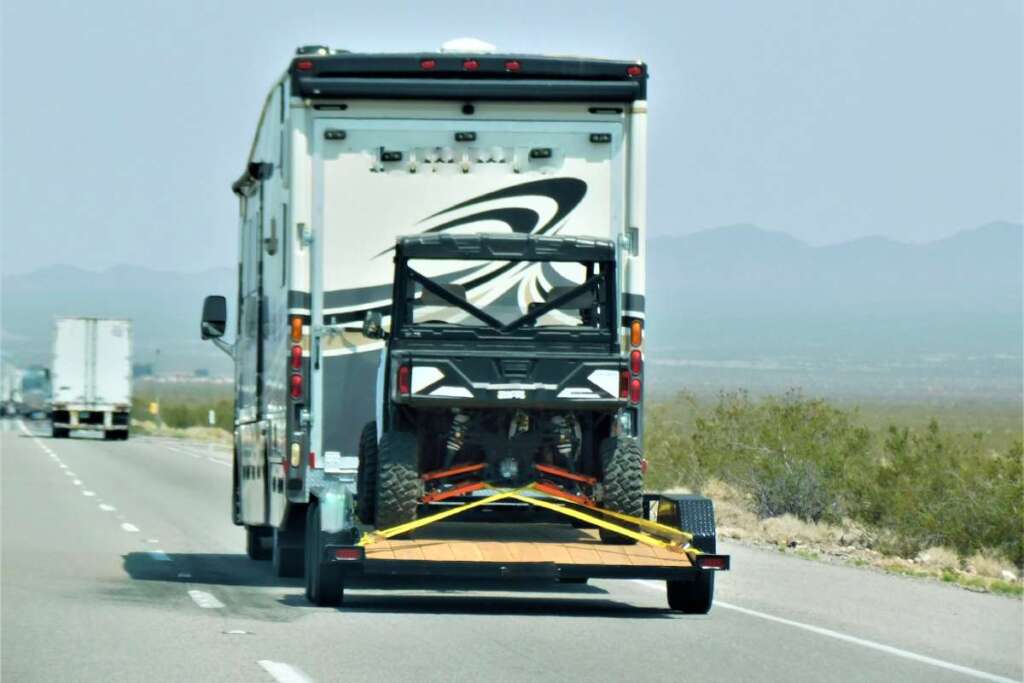
What To Do If Trailer Sway Starts
Even with the best preparation, sway can still occur. Knowing how to respond calmly and correctly can make all the difference.
The most important rule is: don’t panic. Sudden or aggressive reactions often make the situation worse.
Instead, follow these steps:
- Ease off the accelerator gradually
Allow your vehicle to slow down naturally. Reducing speed decreases the energy feeding the sway. - Keep the steering wheel steady
Avoid overcorrecting or steering against the sway. Hold a straight line and let the trailer stabilise. - Use trailer brakes if available
Applying the trailer’s brakes independently can help pull it back into alignment behind the vehicle. - Avoid heavy braking with the tow vehicle
Braking hard can cause the trailer to jackknife, making the situation far more dangerous. - Do not accelerate to “pull out” of sway
This is a common myth. Adding speed increases momentum and can worsen the instability.
Once control is regained, safely pull over and inspect your setup before continuing your journey.
Best Practices for Loading Your Trailer
Proper loading is one of the most effective ways to prevent trailer sway. It’s not just about how much weight you carry, but where and how it’s distributed.
Load Forward of the Axle
As a general rule, about 60% of your cargo weight should be positioned forward of the trailer axle. This helps maintain proper tongue weight and keeps the trailer stable.
Keep Heavy Items Low
Placing heavy items high increases the trailer’s centre of gravity, making it more prone to tipping and swaying. Always position heavier objects as low as possible.
Balance Left to Right
Uneven weight distribution from side to side can cause handling issues and uneven tyre wear. Ensure the load is evenly distributed across the trailer.
Secure Your Load Properly
Loose items can shift during travel, changing the trailer’s balance and triggering sway. Use appropriate restraints to keep everything firmly in place.
Stay Within Weight Limits
Never exceed the trailer’s maximum weight ratings. Overloading puts additional strain on tyres, suspension, and braking systems, increasing the risk of instability.
Check Your Setup Regularly
Even if everything is properly loaded at the start of your journey, loads can shift over time. Make it a habit to stop early in your trip and perform a quick inspection.
Additional Tips for Safer Towing
Beyond loading and driving technique, there are several additional measures you can take to minimise the risk of trailer sway:
- Maintain proper tyre pressure for both the trailer and tow vehicle
- Use the correct tow hitch and ensure it’s properly installed
- Install sway control systems or weight distribution hitches if needed
- Drive at a safe, consistent speed—especially in windy conditions
- Allow extra stopping distance when towing
Being proactive with these measures can significantly improve your overall towing stability.
Final Thoughts
Trailer sway is a serious risk, but it’s also largely preventable. By understanding the causes and taking the right precautions, you can greatly reduce the likelihood of it occurring.
Safe towing comes down to preparation, awareness, and control. Load your trailer correctly, maintain your equipment, and drive with care—especially at higher speeds or in challenging conditions.
And when it comes to ensuring stability during loading and transport, using reliable, high-quality equipment makes all the difference. That’s why many Australians trust SureWelds Australian-made Loading Ramps for their strength, durability, and performance in demanding conditions.







Leave a Comment